.png)
"Can this thing tell if I have a slipped disc? Or scoliosis?" It's a reasonable question. Here's an honest answer.
Bodydot Is Not a Medical Device
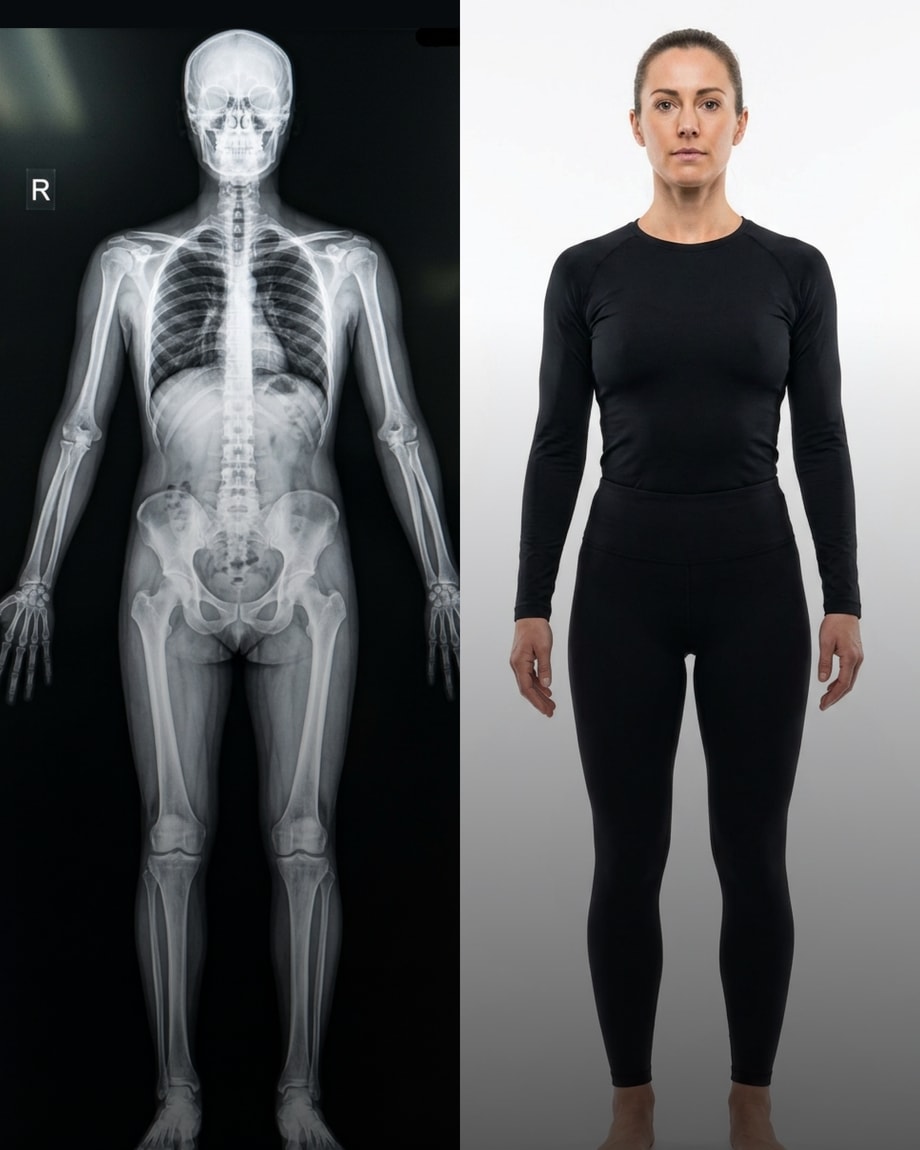
Bodydot is an AI Body Analyzer built for fitness and Pilates studios. It is not a medical imaging device. It cannot see inside your body, diagnose conditions, or replace the judgment of a physician.
X-rays, MRI, and CT scans examine internal structures. Bodydot examines external posture and body alignment. These are fundamentally different tools with fundamentally different purposes.
So no — Bodydot cannot tell you whether you have a herniated disc, scoliosis, arthritis, or any other specific medical condition.
What It Can Detect
Bodydot quantifies external postural alignment across 40 metrics. While this is not medical diagnosis, some of these measurements can serve as signals worth paying attention to.
Shoulder Height Asymmetry
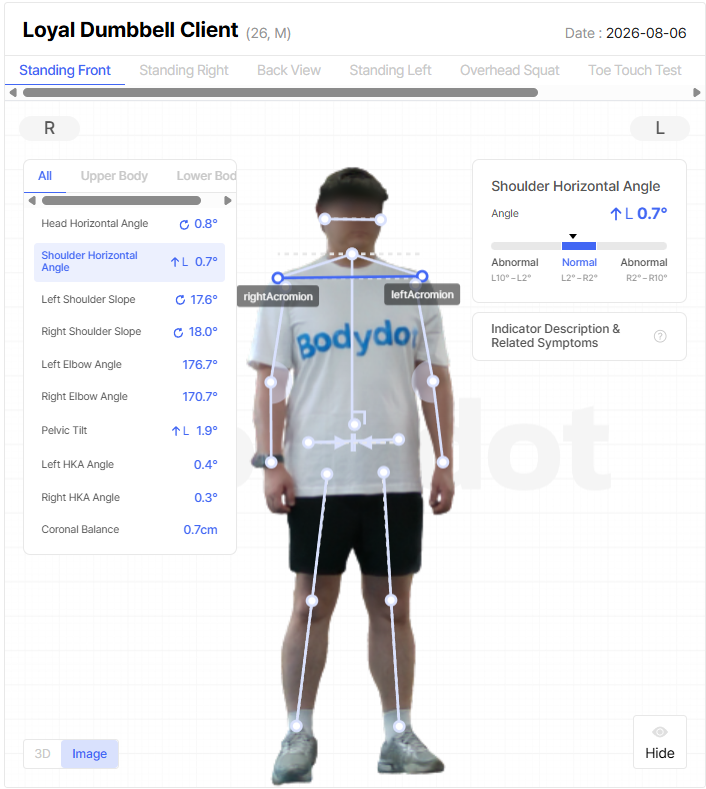
A significant difference in shoulder height — visible in the scan as a measurable angle — is one of the most common ways scoliosis-like patterns are first noticed. Scoliosis is often discovered not by X-ray, but by someone noticing their shoulders or hips sit at different heights. Bodydot puts a number on that.
Forward Head Posture Angle
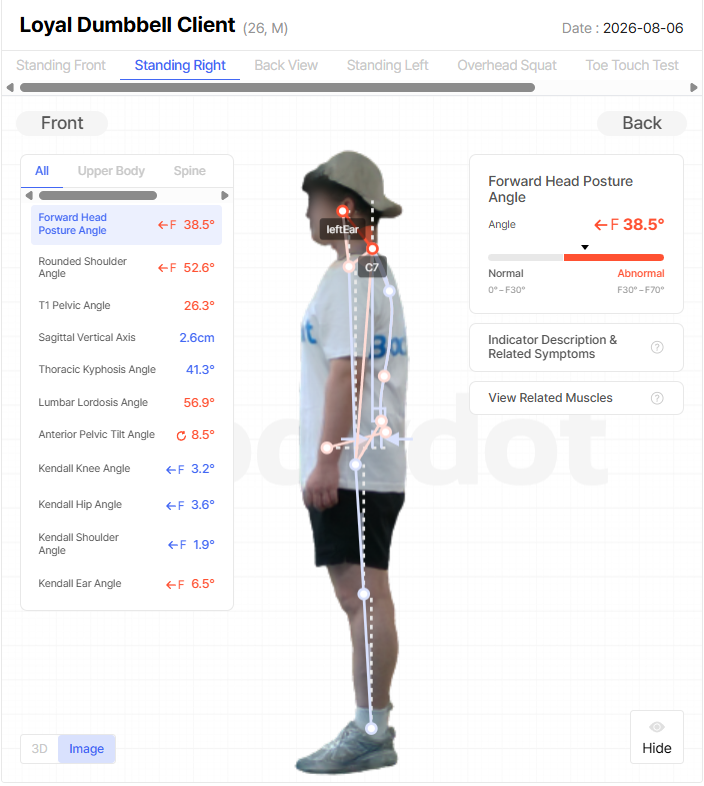
When the cervical angle falls significantly outside the normal range, it suggests the head is positioned too far in front of the shoulders. Research indicates that for every centimeter the head moves forward, the neck bears an additional 2–3 kg of load — up to 15 kg in severe cases. A Bodydot report that shows an elevated forward head angle is a meaningful signal.
Pelvic Tilt
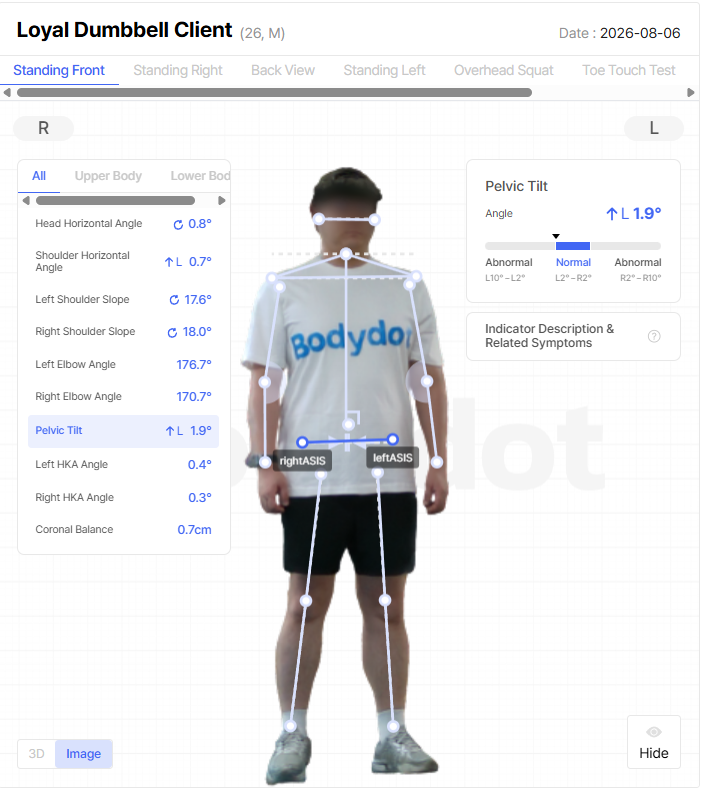
Anterior or posterior pelvic tilt beyond normal ranges is associated with lower back discomfort and leg alignment issues. Bodydot measures this angle precisely.
What to Do If Your Numbers Are Outside Normal Range
An out-of-range Bodydot measurement does not mean you have a disease. But it does suggest a next step.
- Talk to your trainer — Ask what targeted exercises might help address the imbalance
- See a medical professional — If a measurement is significantly outside the normal range, a visit to an orthopedic or rehabilitation specialist is worth considering
- Re-measure regularly — Track whether the numbers improve with consistent training
Summary
Capability | Bodydot |
Disease diagnosis | ❌ Not possible — not a medical device |
Postural alignment measurement | ✅ 40 metrics, quantified |
Flagging abnormalities for follow-up | ✅ Useful reference |
Tracking improvement over time | ✅ Before/After comparison |
Bodydot shows you how your body is aligned right now. That data can start a conversation with a professional. But any final health judgment belongs with a qualified medical provider.